
AI-Enabled CV Review
Eliminating Cost, Inconsistency, and Delay in Career Services
Designing an AI-powered solution to replace an expensive, inconsistent manual mentor process. delivering scalable, personalized, and high-quality career support.
Project Overview: Solving a Financial and Quality Crisis
Great Learning's manual resume review process, anchored by external mentors—had become a major operational bottleneck.
- Prohibitive Cost: ~$1.2 Million (₹10 Crores) annually.
- Inconsistent Quality: Highly subjective mentor feedback required frequent QA moderation.
- Lack of Personalization: Generic, repetitive suggestions disconnected from learner goals.
Goal: Build an internal AI system to replace manual reviews with a consistent, scalable, and personalized experience.
Problem Statement: The Unscalable and Unreliable Manual Process
Quality & Consistency
Mentor feedback varied drastically; QA required frequent audits.
→ AI delivered standardized, persona-driven consistency.
Personalization
Generic feedback lacked alignment with role or experience level.
→ Contextual, inline feedback aligned with job roles.
Scalability & Speed
48-hour manual reviews restricted throughput.
→ 10-minute automated reviews. instantly scalable.
Measurable Outcomes & Post-Launch Impact
$1.2M
Operational cost saved annually
Eliminated
external dependency
↓ 70%
Reduction in internal QA time
From 60 mins → 18
mins
↑ 480%
Increase in throughput
48 hrs → 10 mins review
cycle
4.35 / 5
Learner Satisfaction (CSAT)
90%+ positive
rating
Impact Summary: Over 5,673 learners created resumes and 2,802 AI enhancements were applied. A 72.4% acceptance rate validated strong learner trust and consistency, establishing the system as a scalable, high-quality replacement for manual mentor reviews.
Post-Launch Insights
- Learner Journey: Peak usage near program completion — confirming high-value, end-phase engagement.
- Future Growth: Strong feedback for expanding templates and career-path personalization.
User Personas & Needs
Freshers
Needed guidance in structuring resumes, optimizing for ATS compatibility, and effectively showcasing project-based achievements.
Mid-Career Professionals
Faced challenges reframing career transitions and condensing long work histories into focused, high-impact narratives.
Career Switchers
Needed help articulating transferable skills and repositioning prior experience for credibility in new domains.
Senior Professionals
Sought clarity in expressing leadership impact, business outcomes, and team management scope effectively.
Tech Roles
Focused on showcasing technical stacks, projects, and GitHub portfolios in a structured, outcome-driven way.
User Study Report: Expectations & Pain Points
This AI-powered CV Review feature replaced the manual mentor-based review system, which had become time-consuming, inconsistent, and financially unsustainable, costing nearly ₹10 Crores annually. The human-led process suffered from subjective feedback, frequent moderation needs, and generic, non-personalized comments like "revise this section" or "add this part." The AI-driven system eliminated these inefficiencies, providing scalable, consistent, and deeply contextual feedback aligned with learner goals.
Quantitative Insights
87% found keyword suggestions useful.
93% acted on at least one suggestion.
60% trusted the tool's feedback.
NPS: +26
Key Qualitative Insights
Expectations: Clear, actionable feedback — not just format-based but contextually aligned with job roles.
Feedback Types: Keyword match, grammar, tone, ATS formatting, and impact-based content improvements.
Trust Factors: Learners valued explanations, example-based guidance, and confidence indicators for suggestions.
Pain Points: Previous system provided generic feedback, lacked context, and used confusing templates.
Emotional Drivers: Job-seekers often felt anxious and sought reassurance, direction, and clarity.
Usability Observations
Keyword Suggestions: Some friction occurred due to unclear placement guidance.
Scoring: Numeric scores felt meaningless without immediate, actionable improvement cues.
Formatting Feedback: Appreciated when contextualized within resume sections.
Language: Overly technical jargon reduced engagement and comprehension.
UX Strategy & Design Principles
Consistency
Standardized logic replaced subjective human reviews.
Contextual Feedback
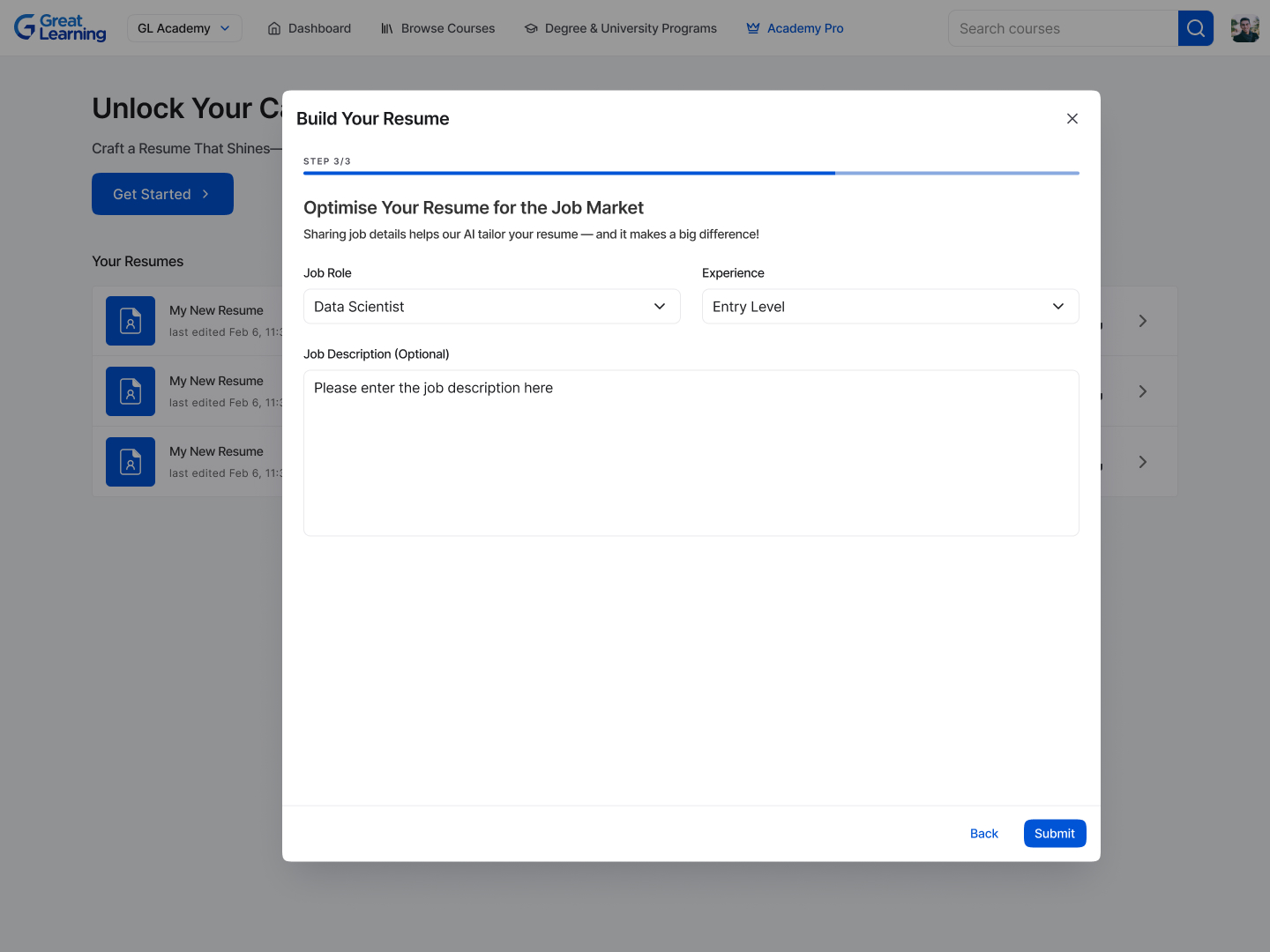
Inline, persona-based suggestions with JD upload integration.
Simple Copy
Used layman terms, eliminating technical jargon for clarity.
Feature Highlights
Included AI bullet improvements, section heatmaps, and admin overrides.
Design & Implementation
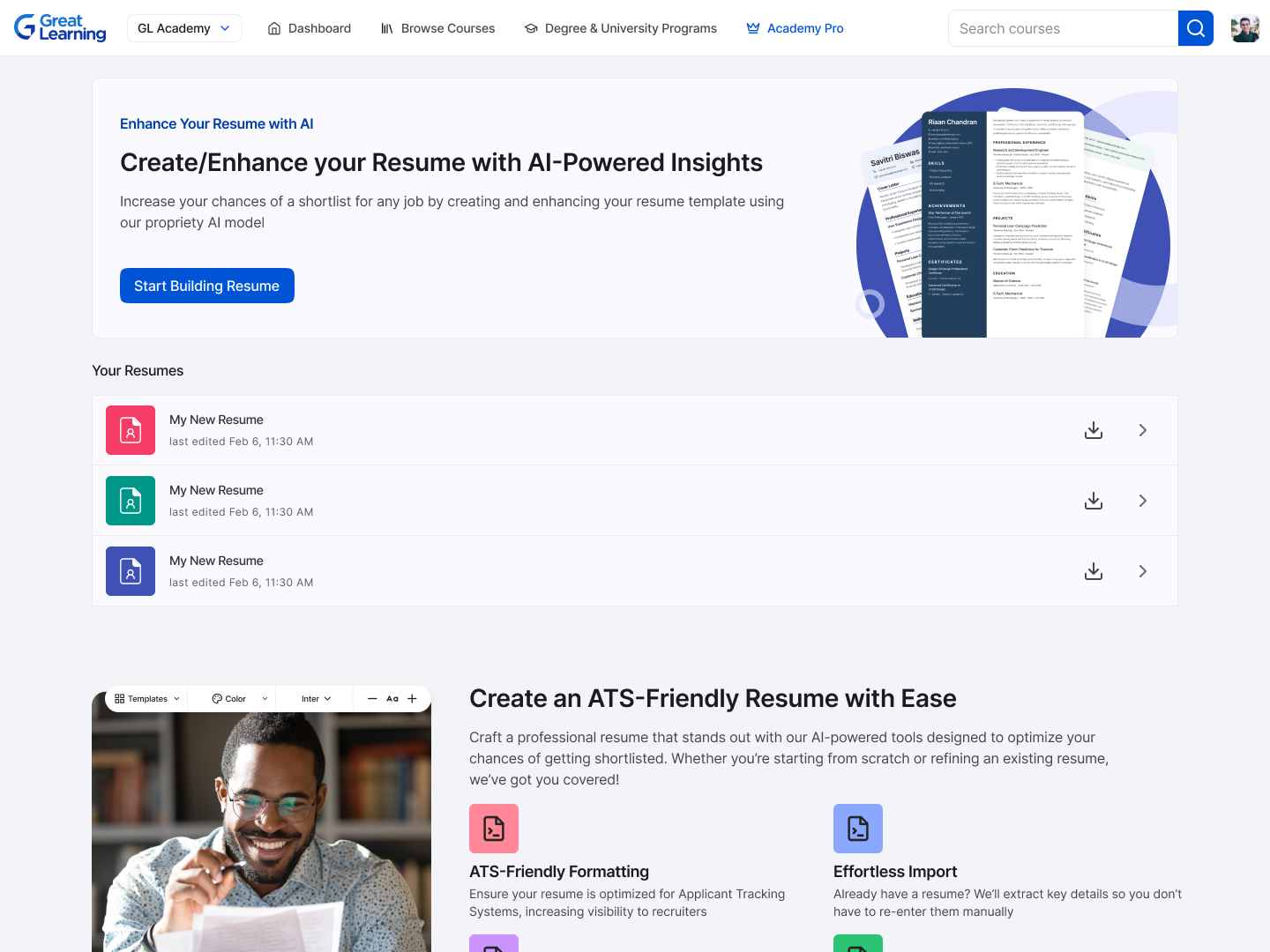
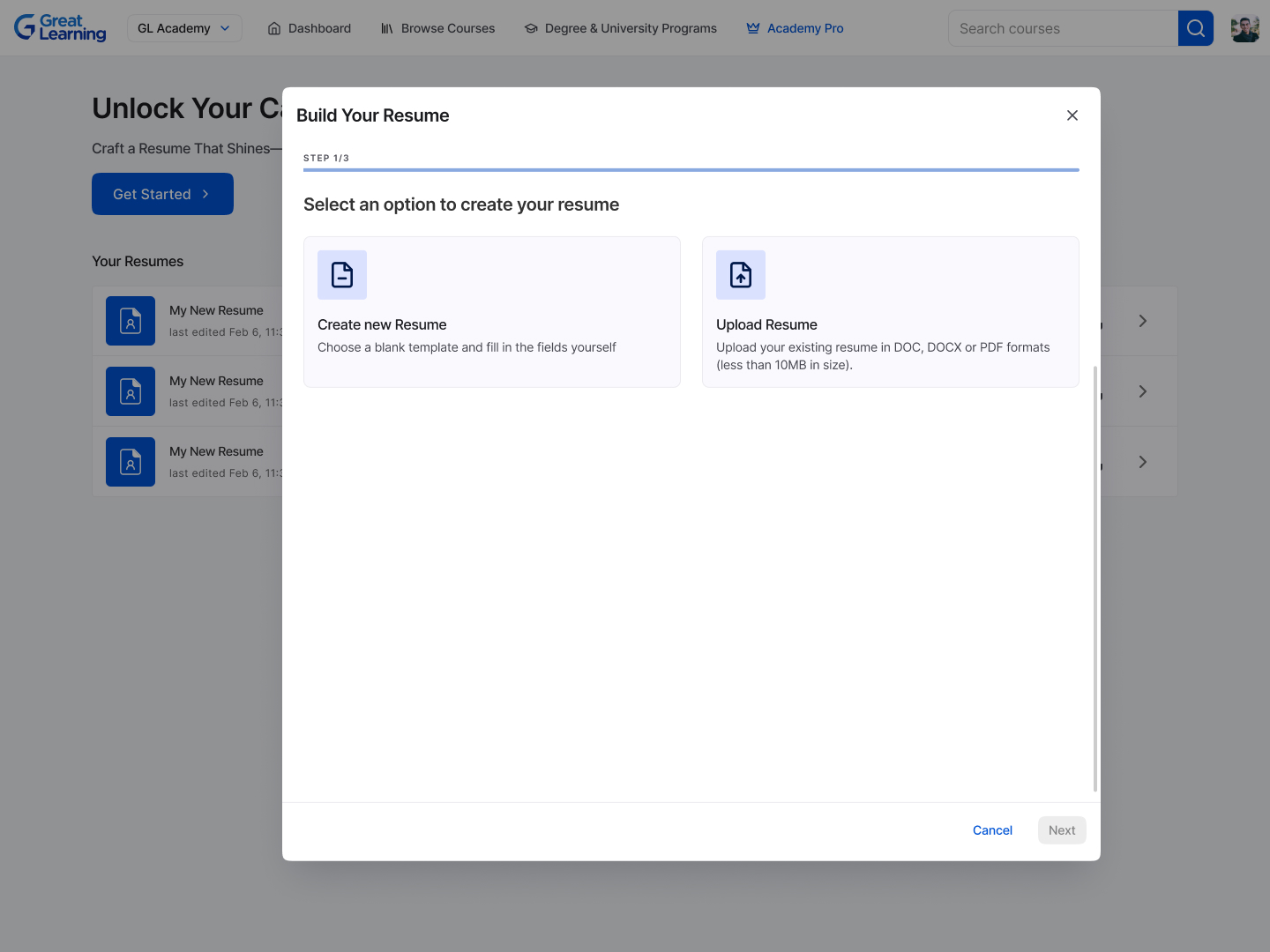
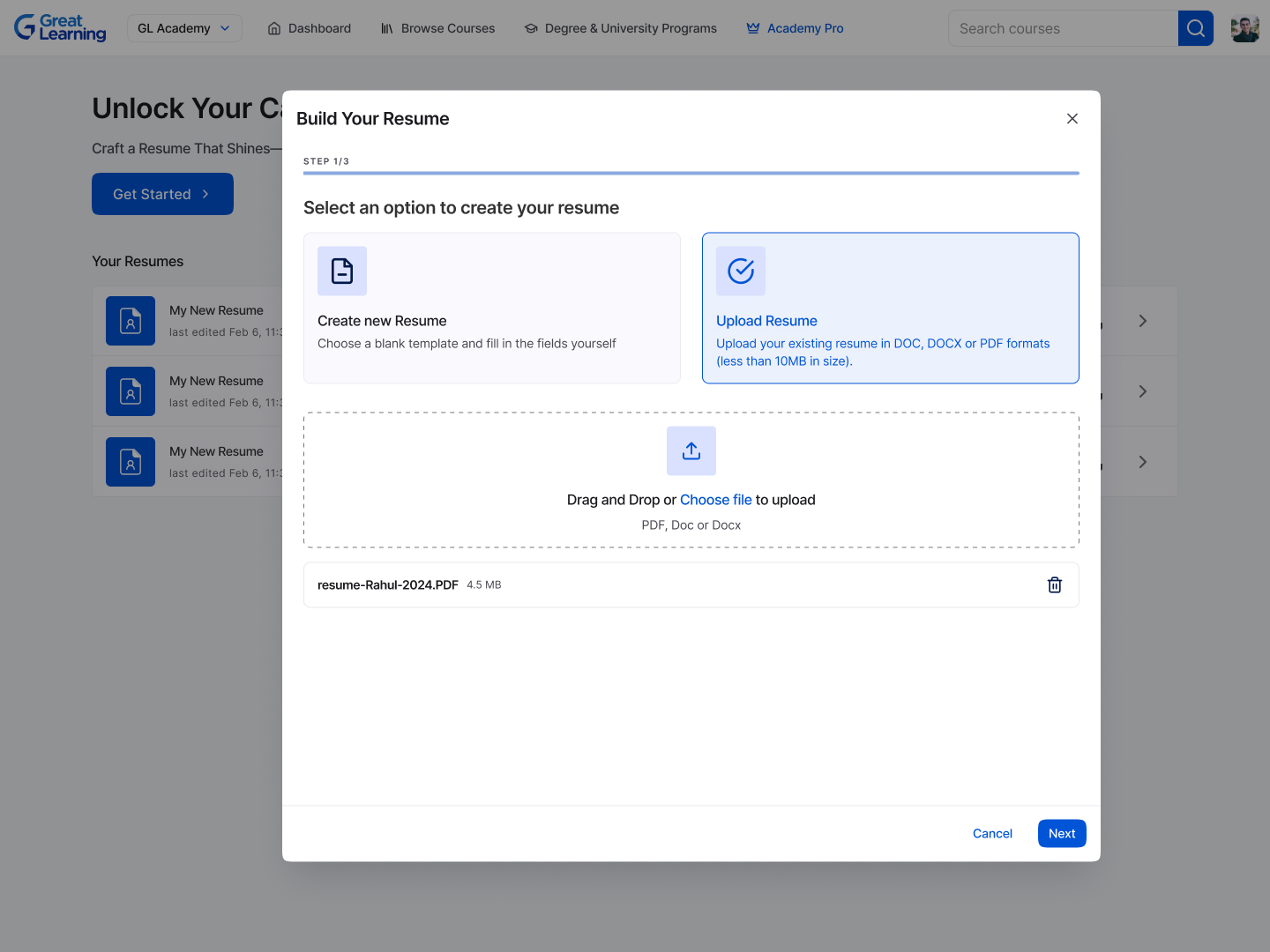
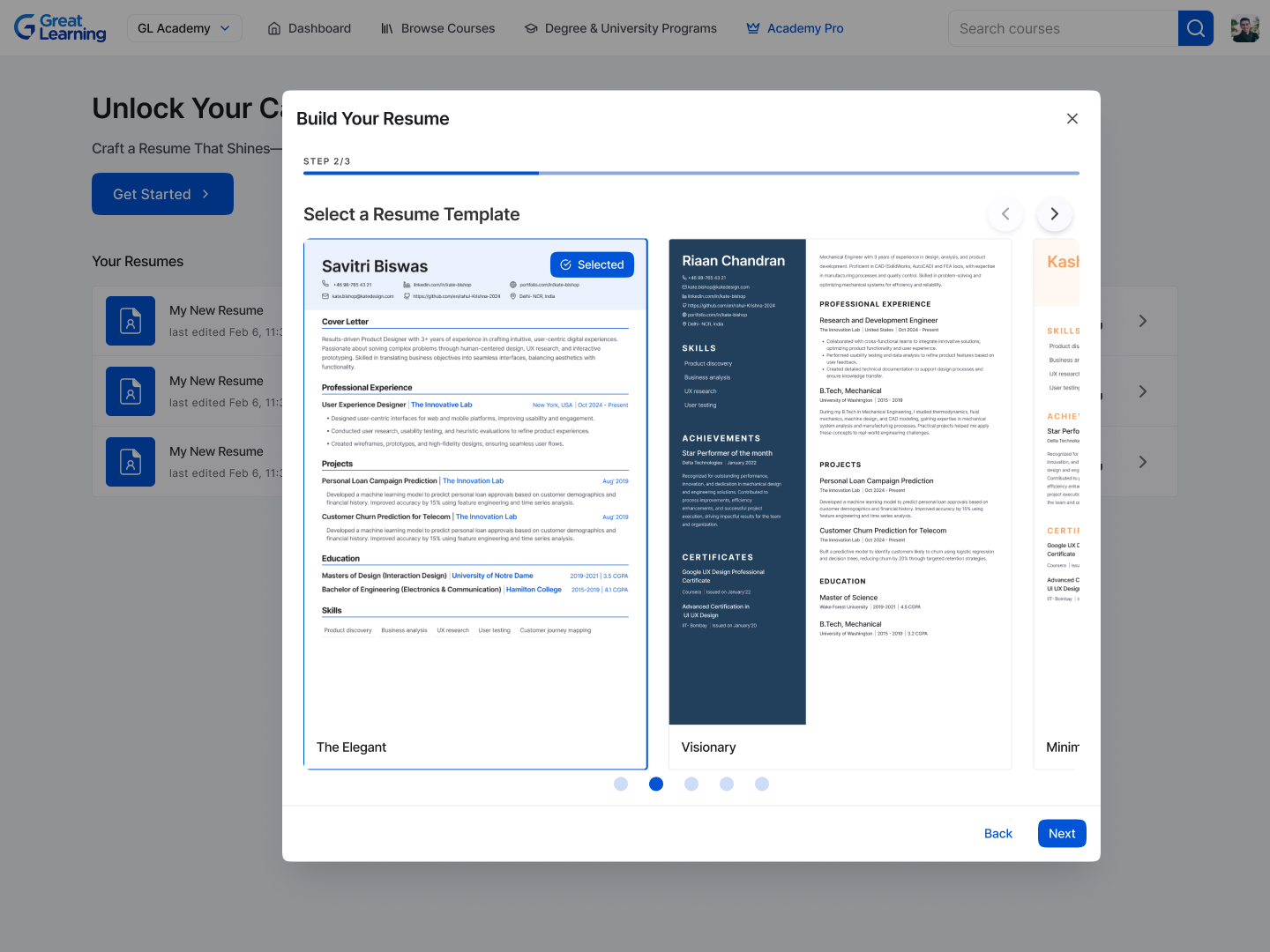
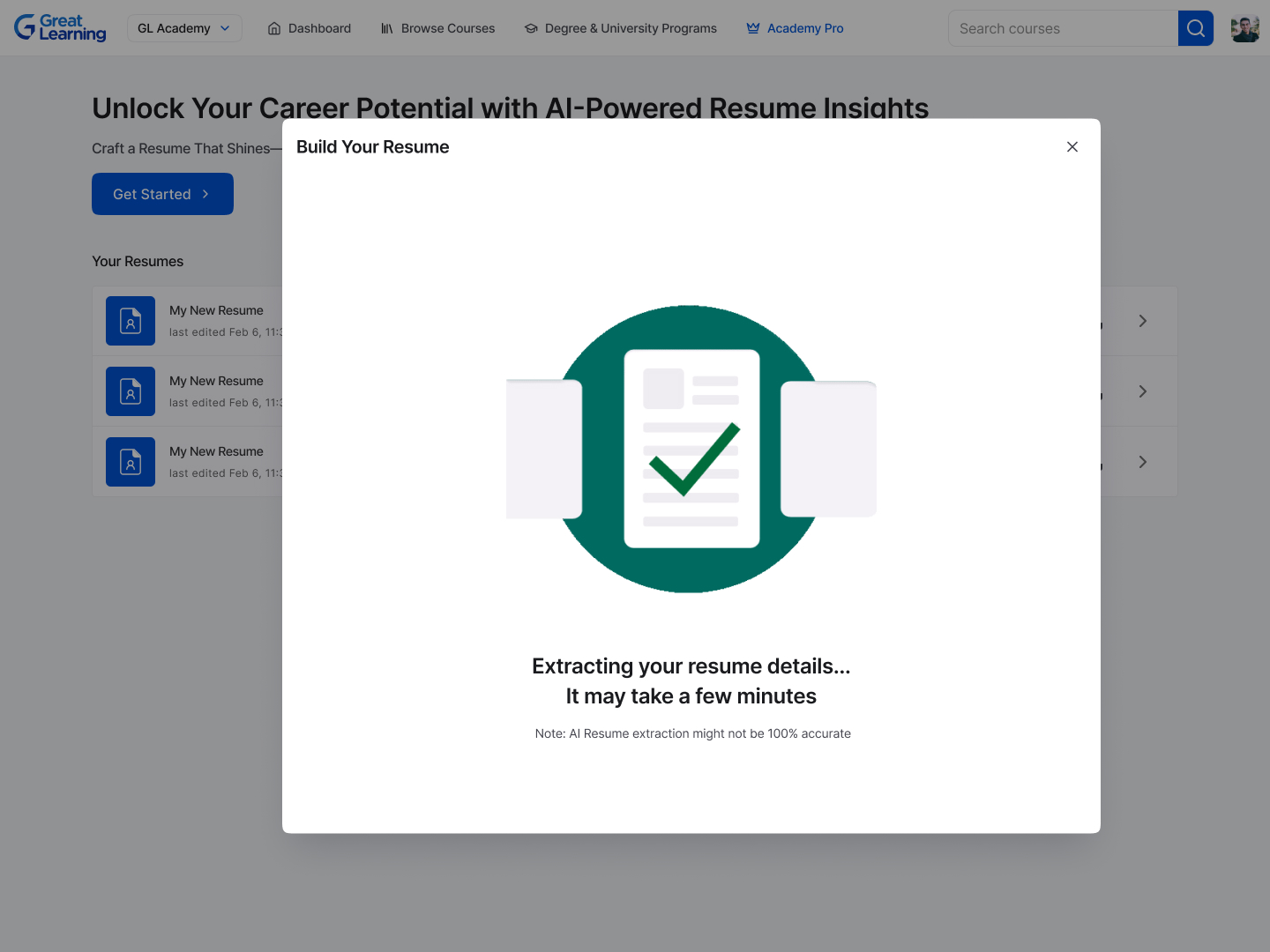
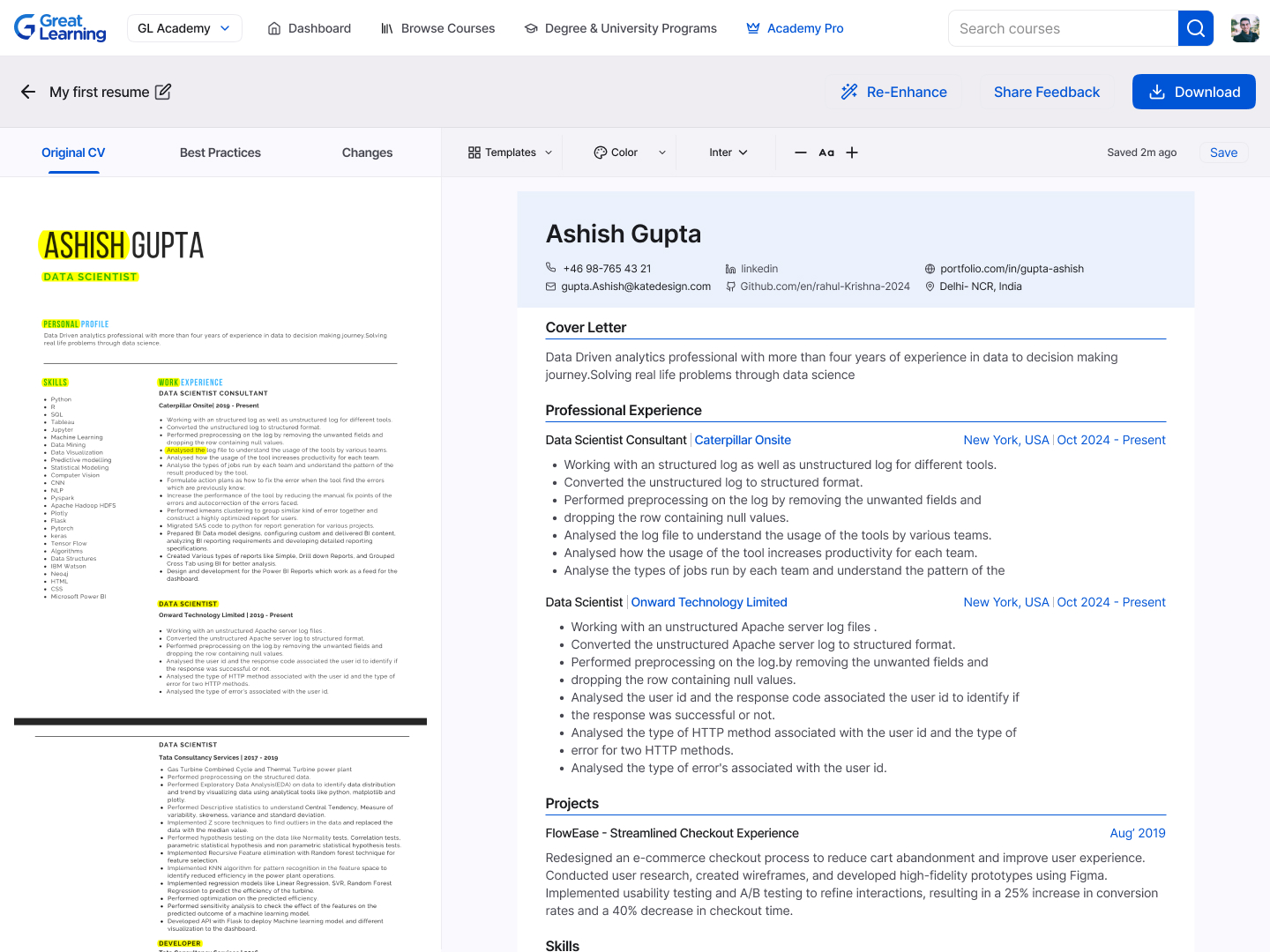
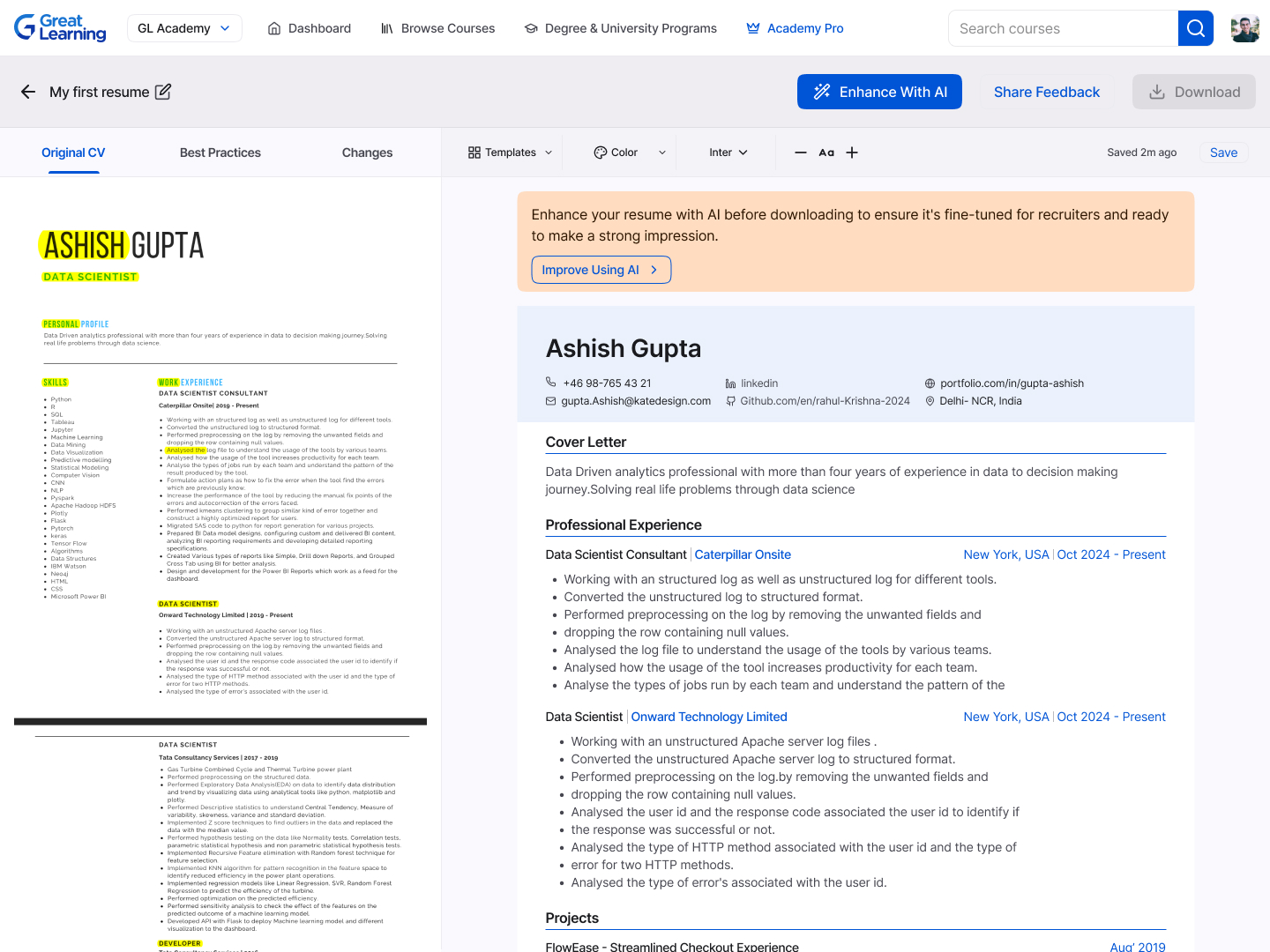
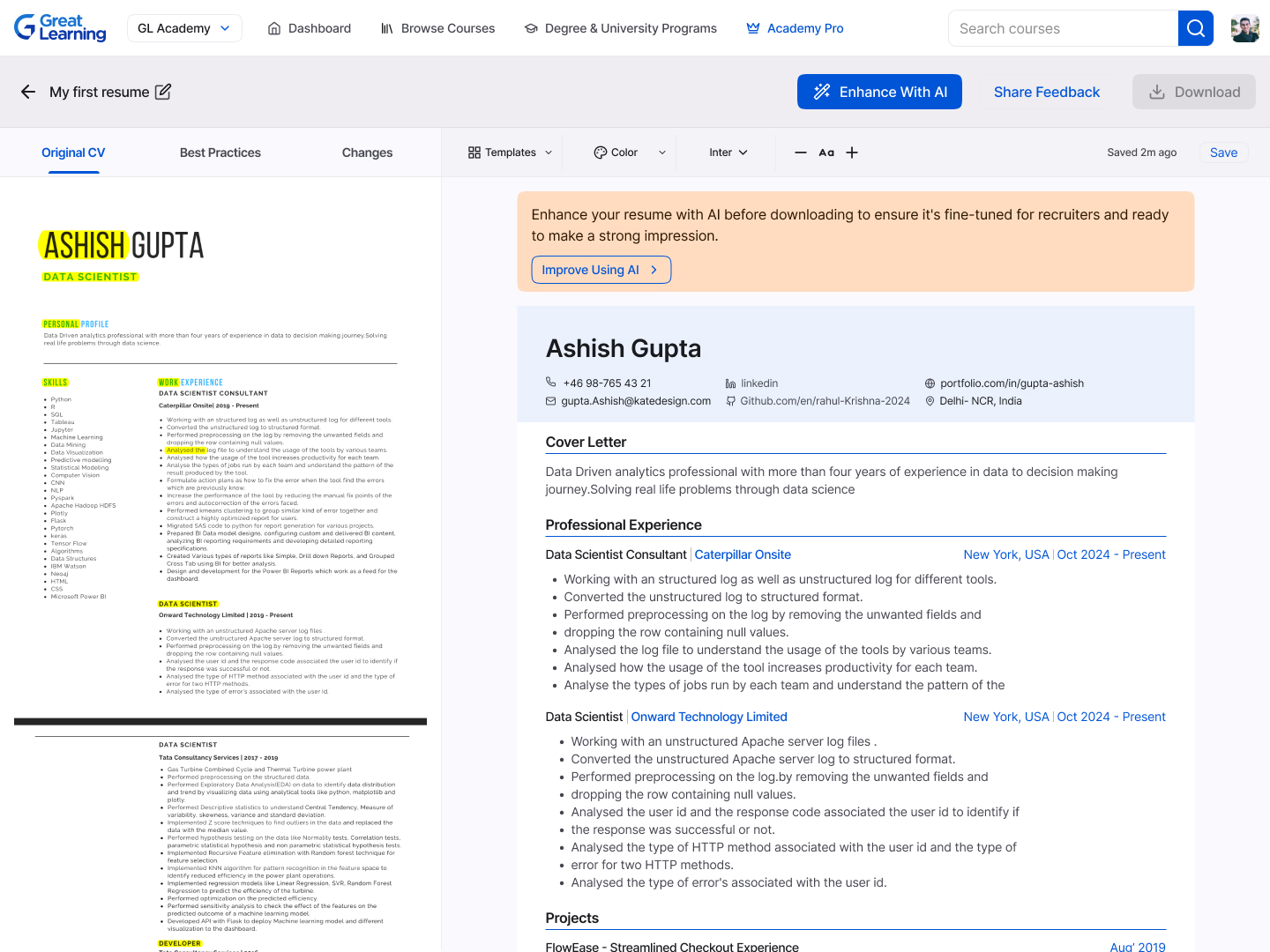
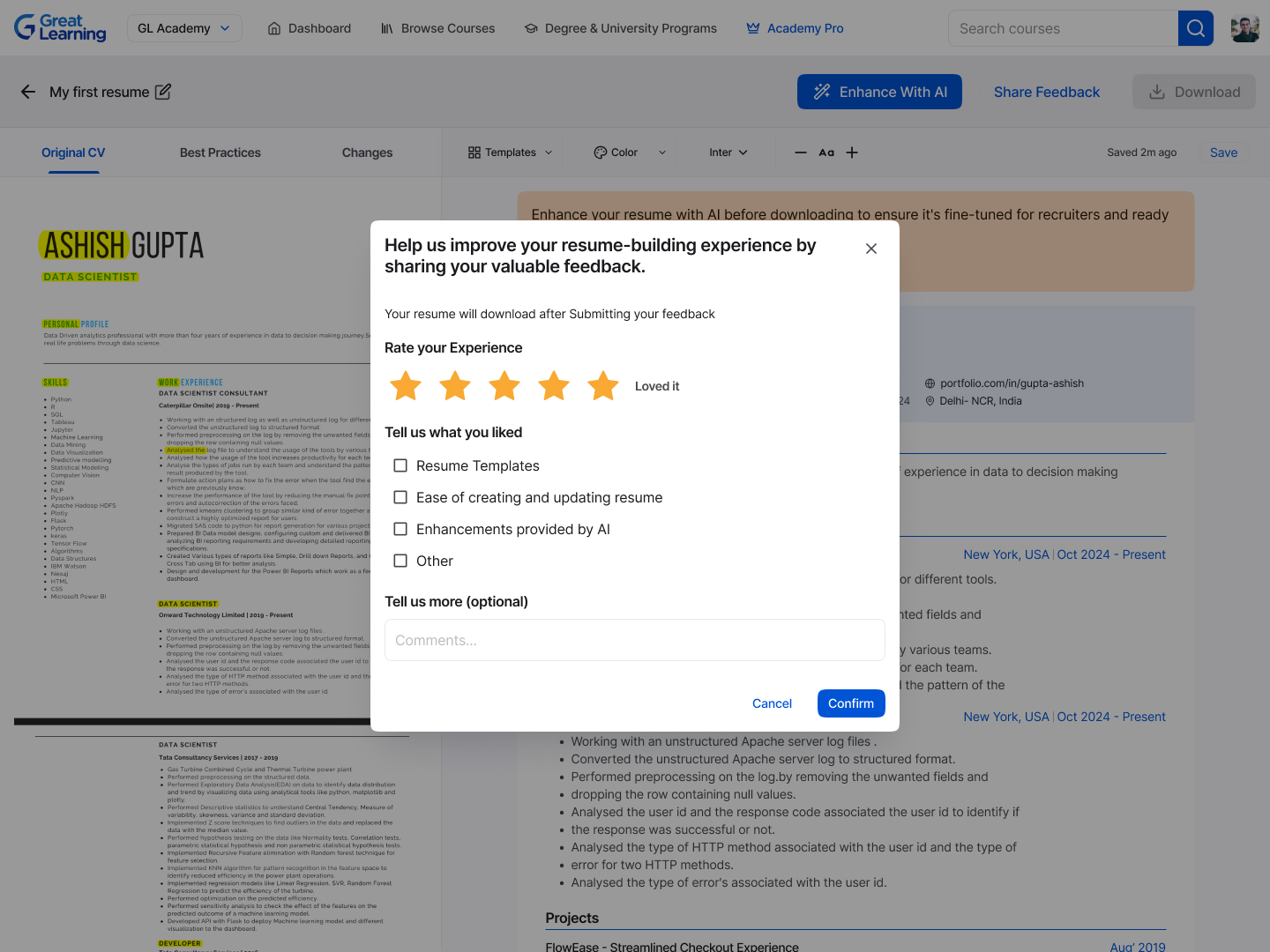
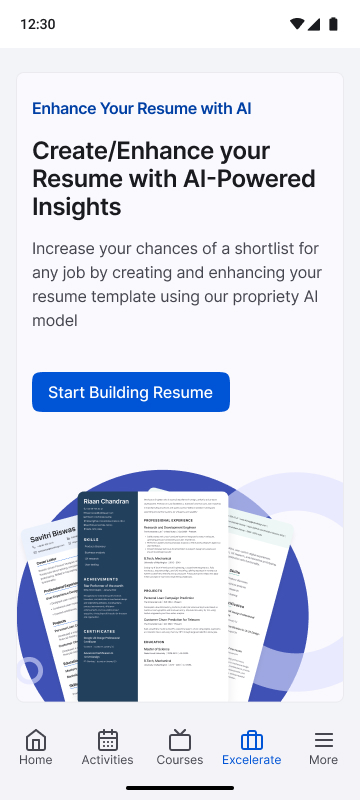
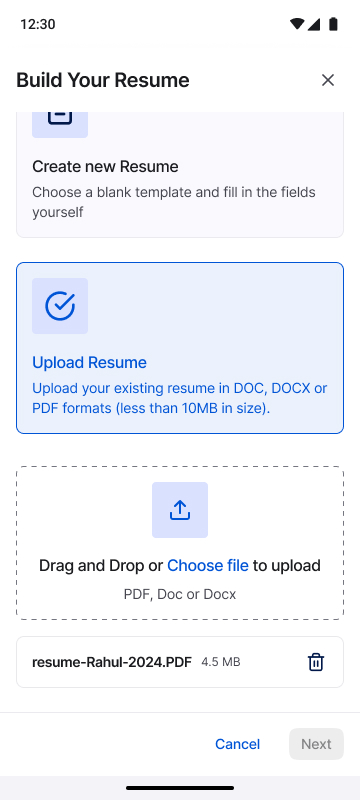
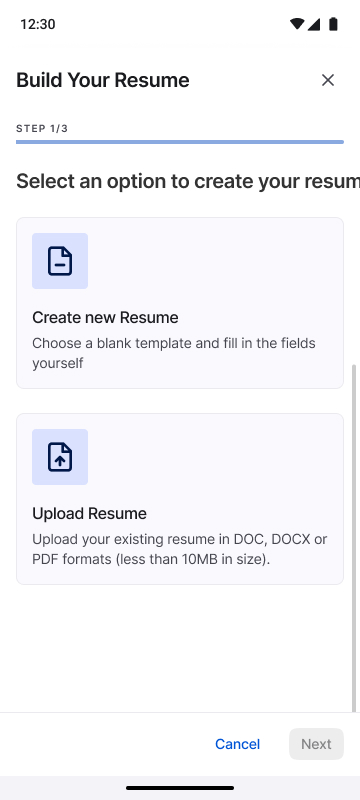
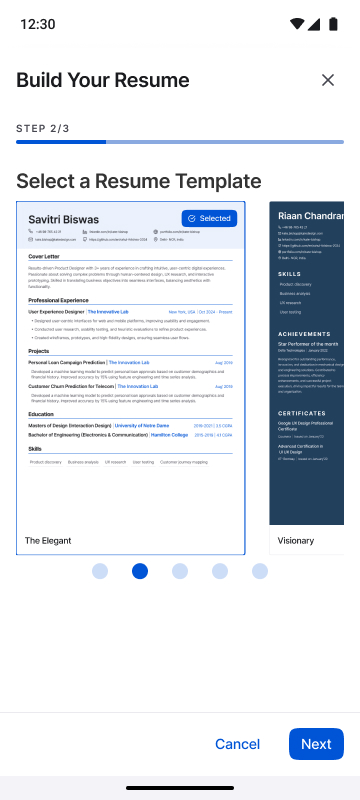
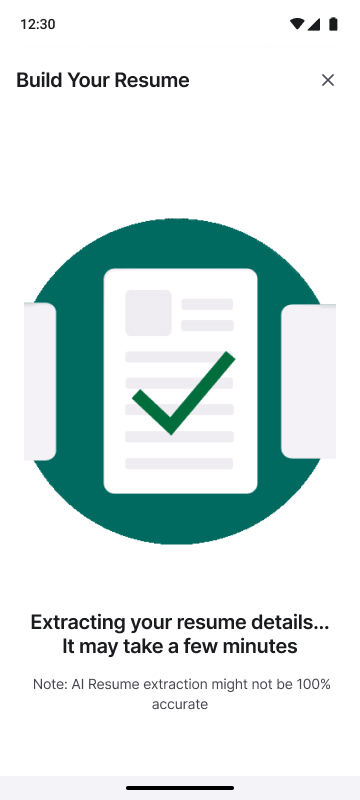
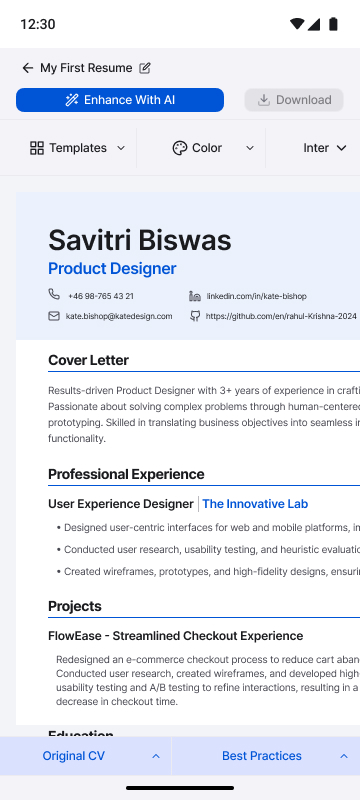
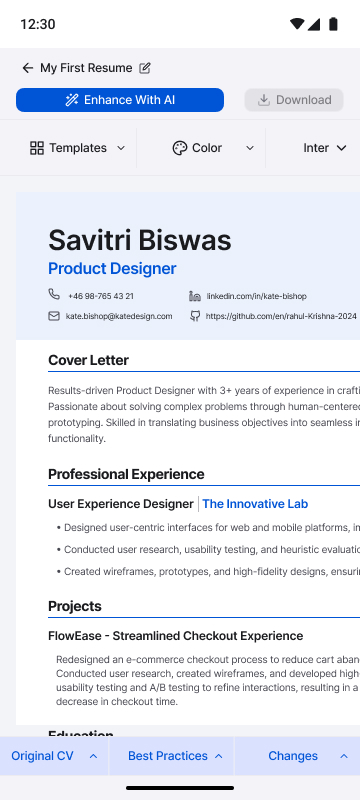
The design phase focused on creating a seamless, trustworthy, and context-aware experience for learners. The system architecture combined AI-driven content intelligence with persona-based design templates, ensuring feedback was not only technically sound but also emotionally supportive. This approach replaced a manual, high-cost process with a solution that delivers real-time, consistent, and actionable feedback while retaining human empathy through thoughtful UX design.
Feature Highlights
- Persona-based templates for Freshers, Mid-Career, Senior Professionals, and Career Switchers.
- AI-powered bullet improvements and keyword insights with real-time contextual feedback.
- Section-wise confidence heatmaps to visualize resume strengths and gaps.
- Real-time job description upload for instant keyword matching and role alignment.
- Admin control panel for internal quality moderation and override when required.
Interface Design Exploration
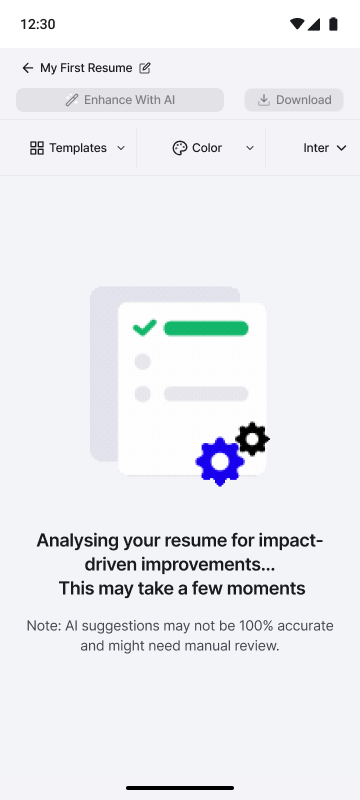
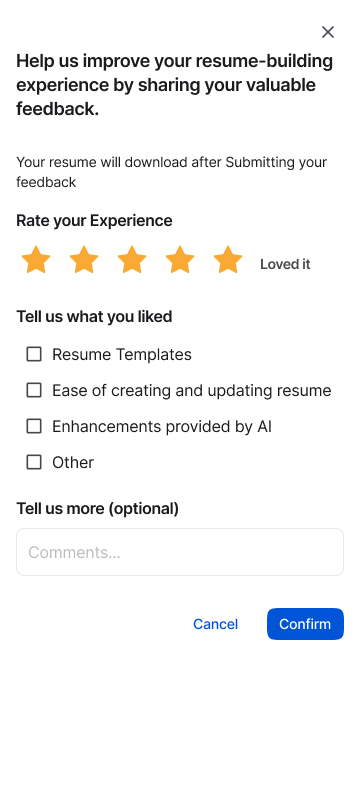
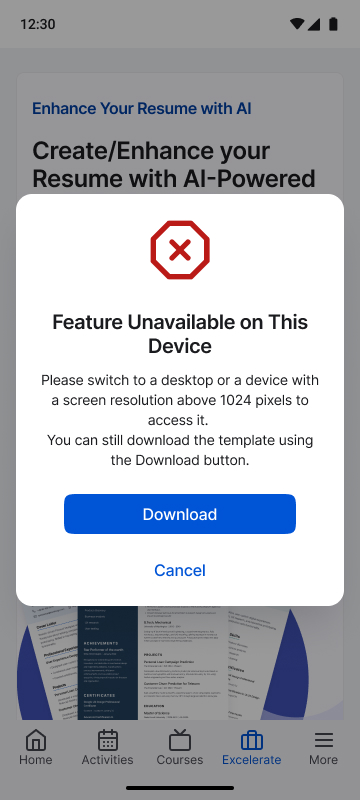
Implementation & Micro-Interactions
Conclusion
This AI-powered initiative replaced a financially unsustainable manual process with a consistent, scalable, and personalized resume review experience, saving $1.2 million annually and reducing QA time by 70%. Learners now receive contextual, actionable, and immediate feedback, empowering confident applications and career growth.